
Agent A
자신에 대한 긍정적인 이야기를 판단하여
해당된 값에 따라 상하로 움직이며 리듬감 있는 소리를 만들어낸다.
Responds to positive statements about the self,
moving up and down according to the value to make a rhythmic sound.
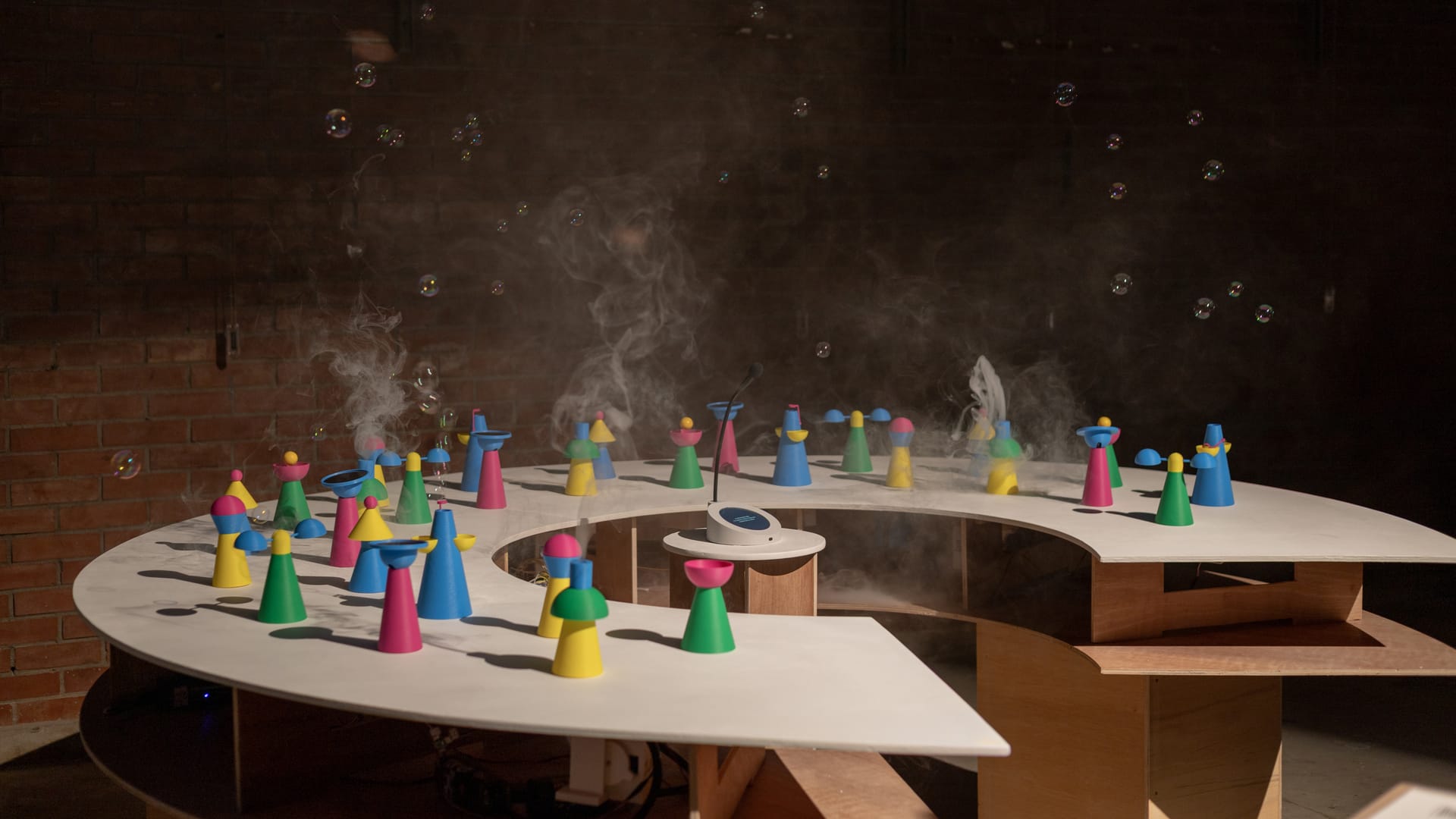
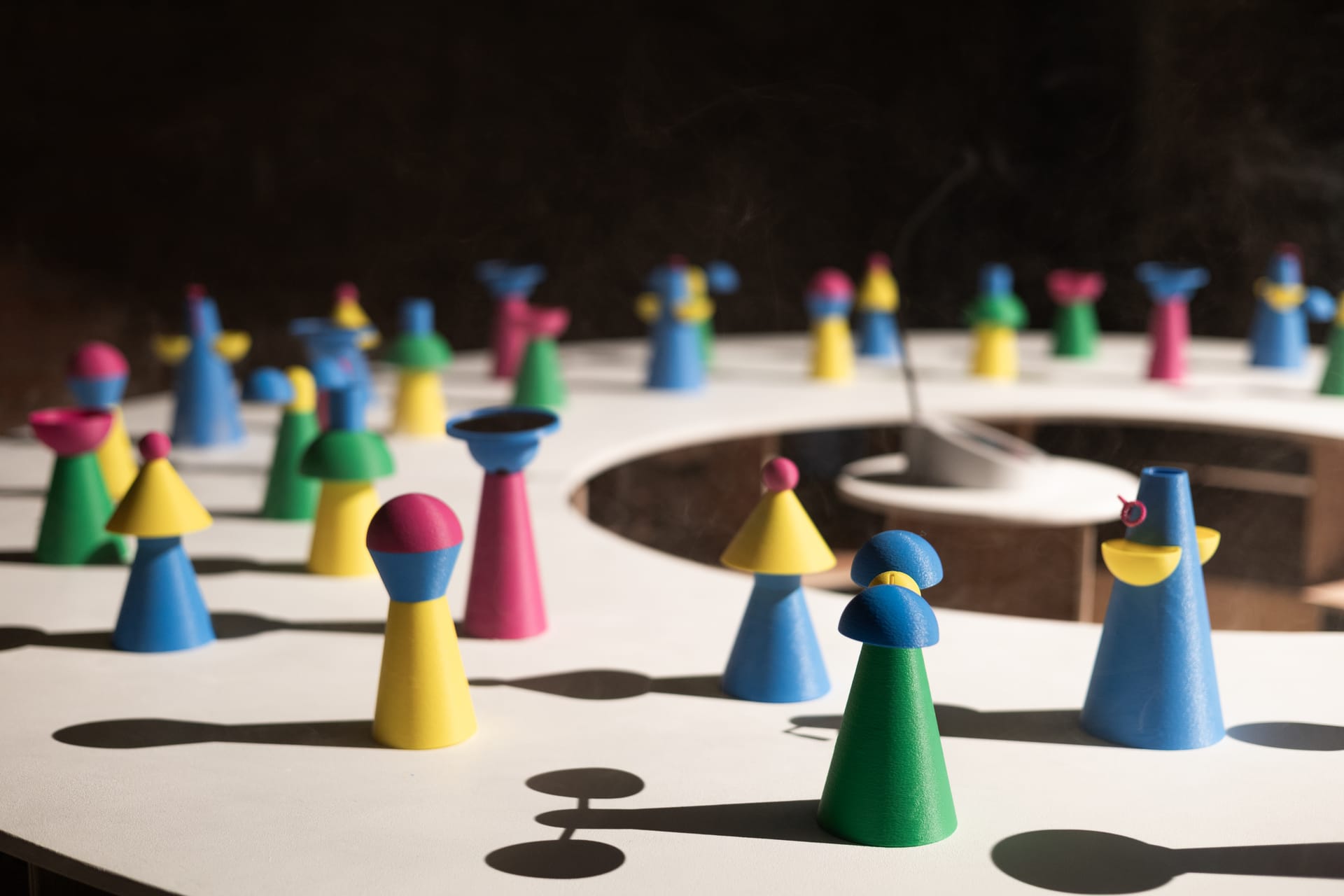
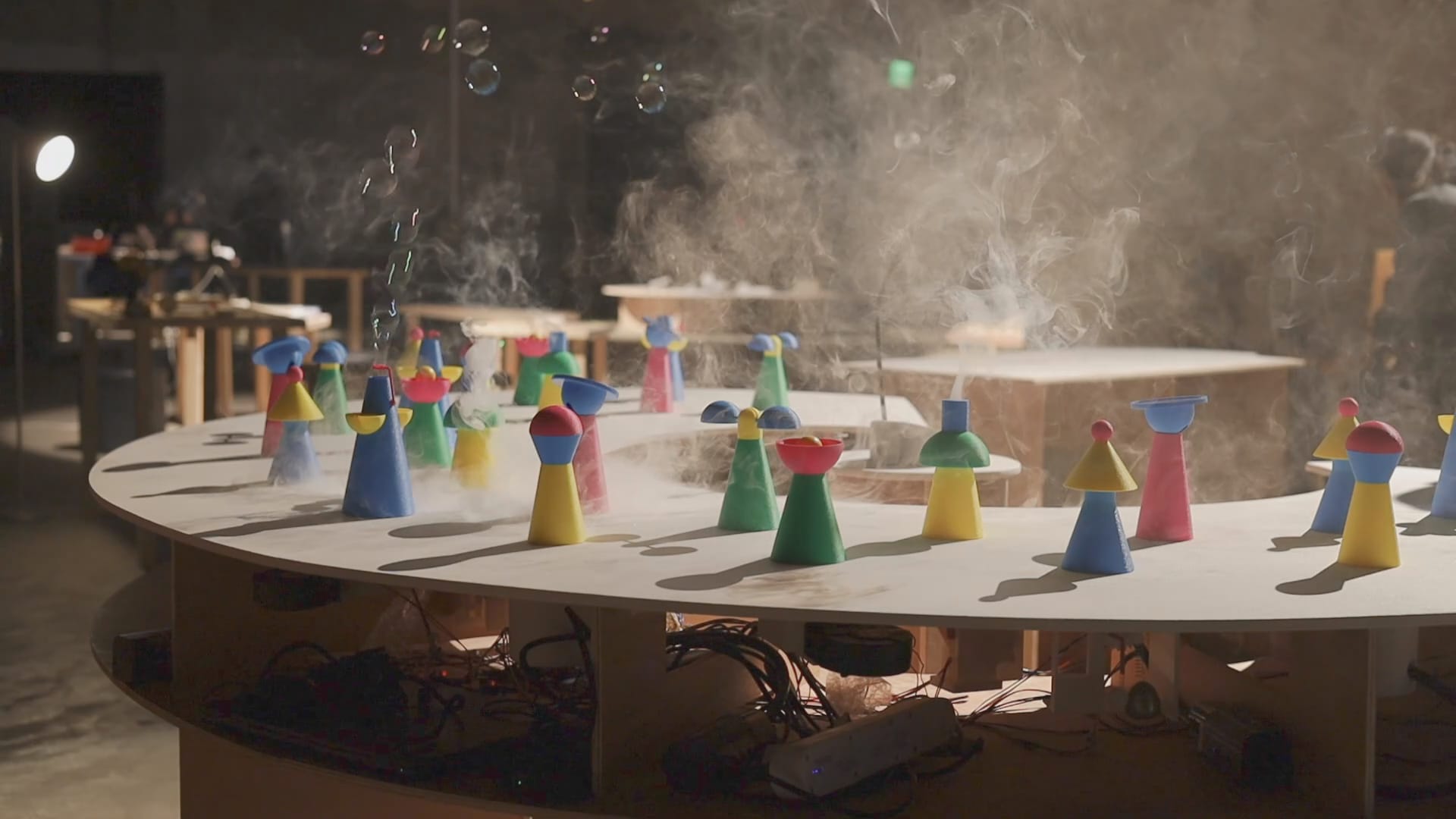
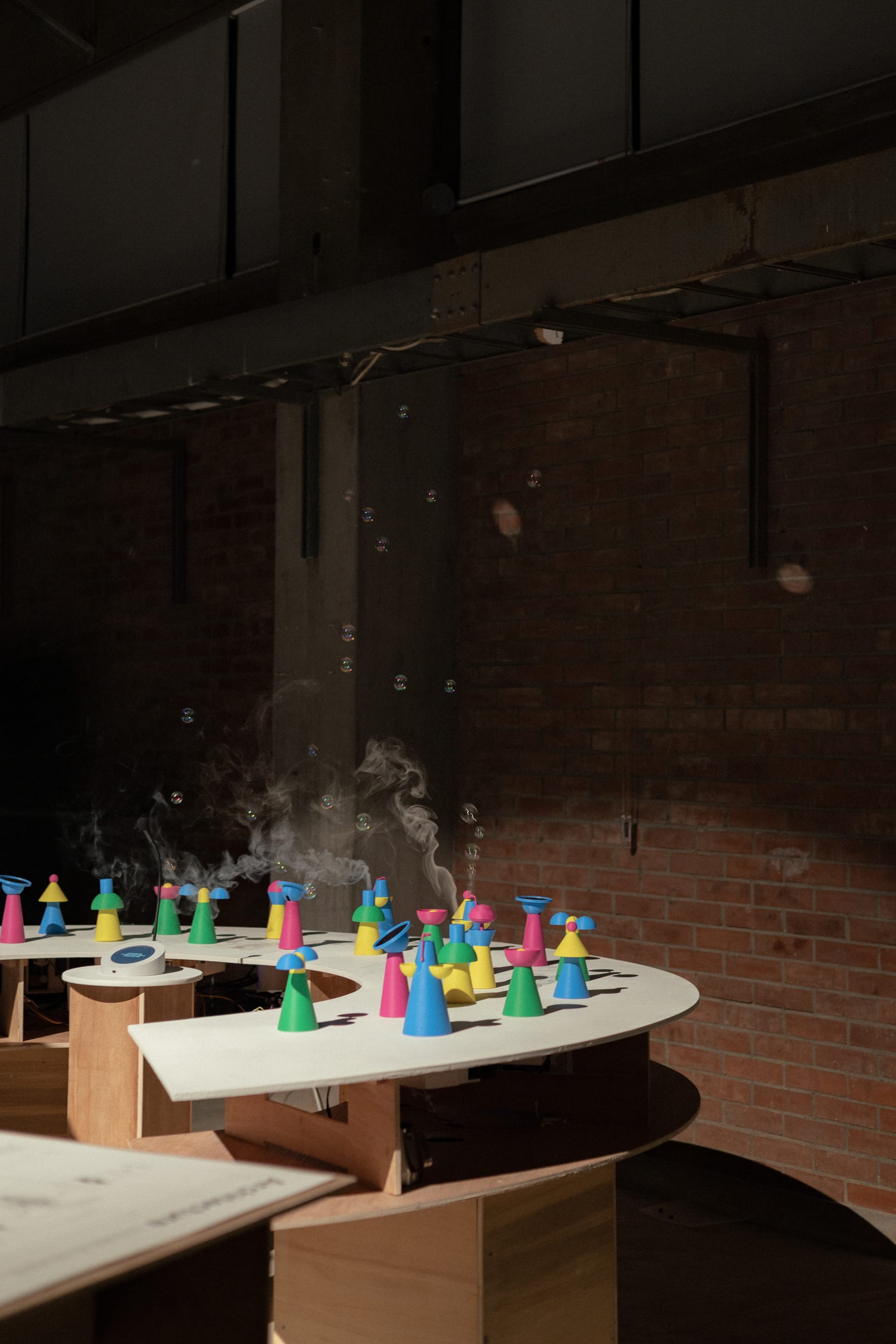
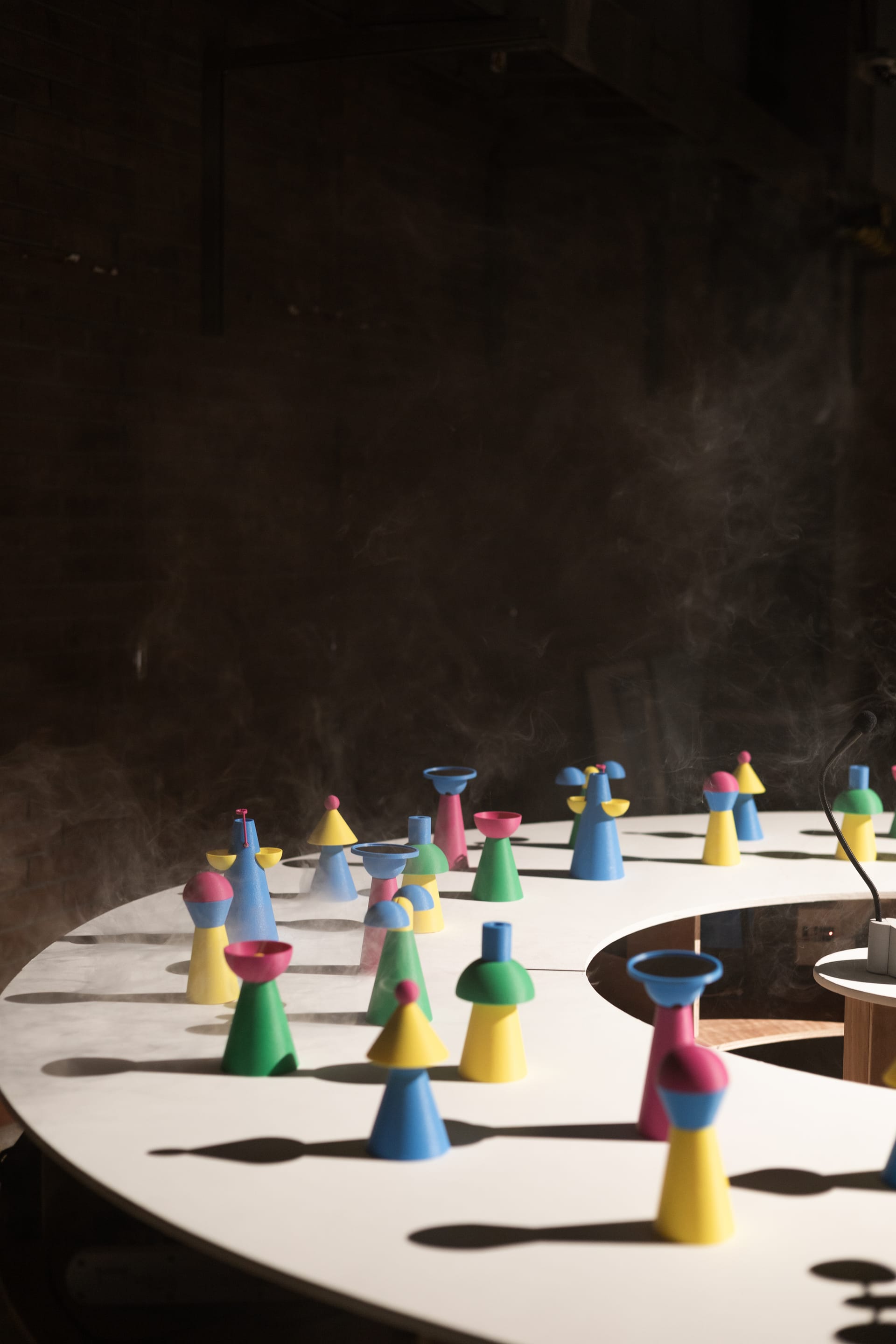
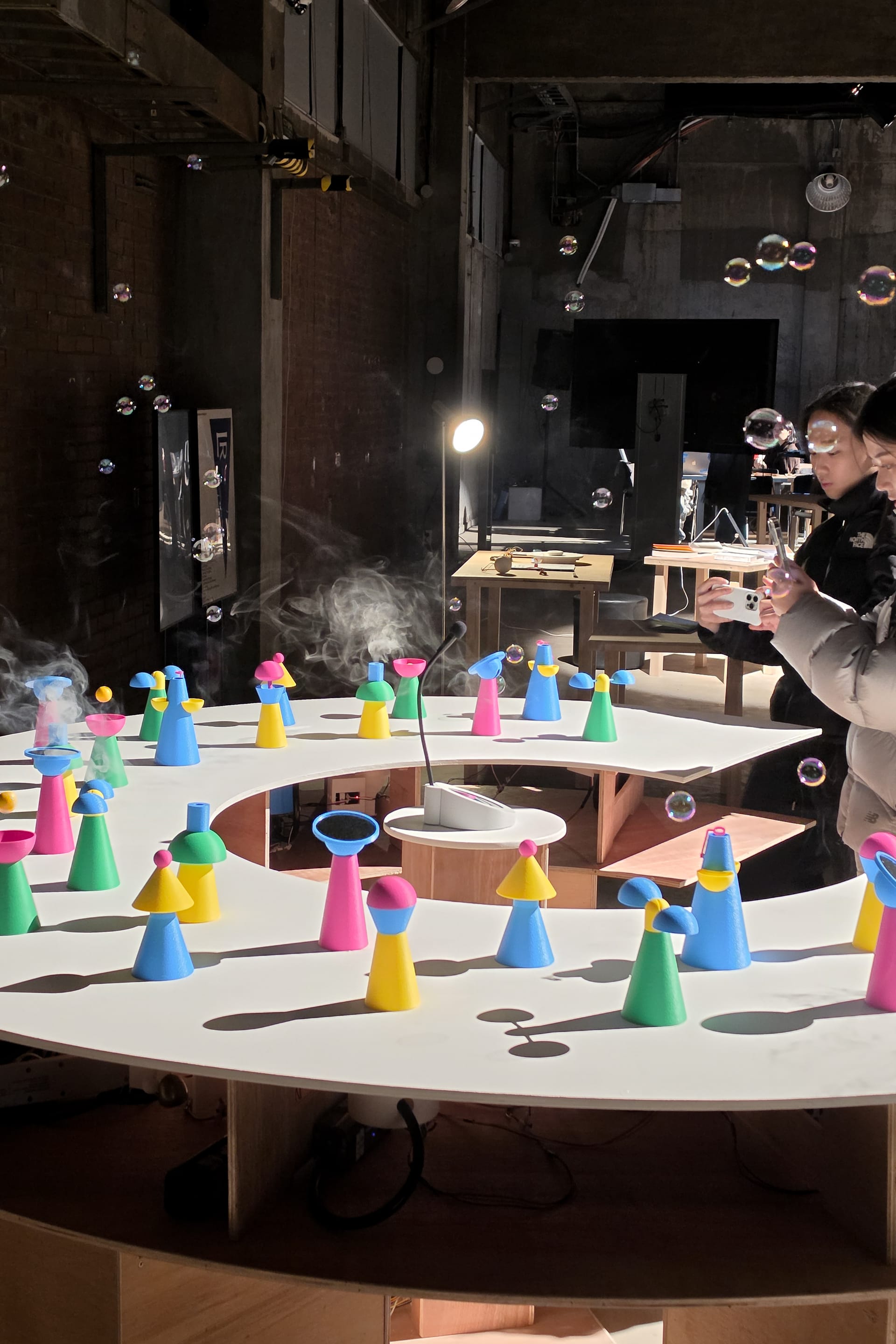
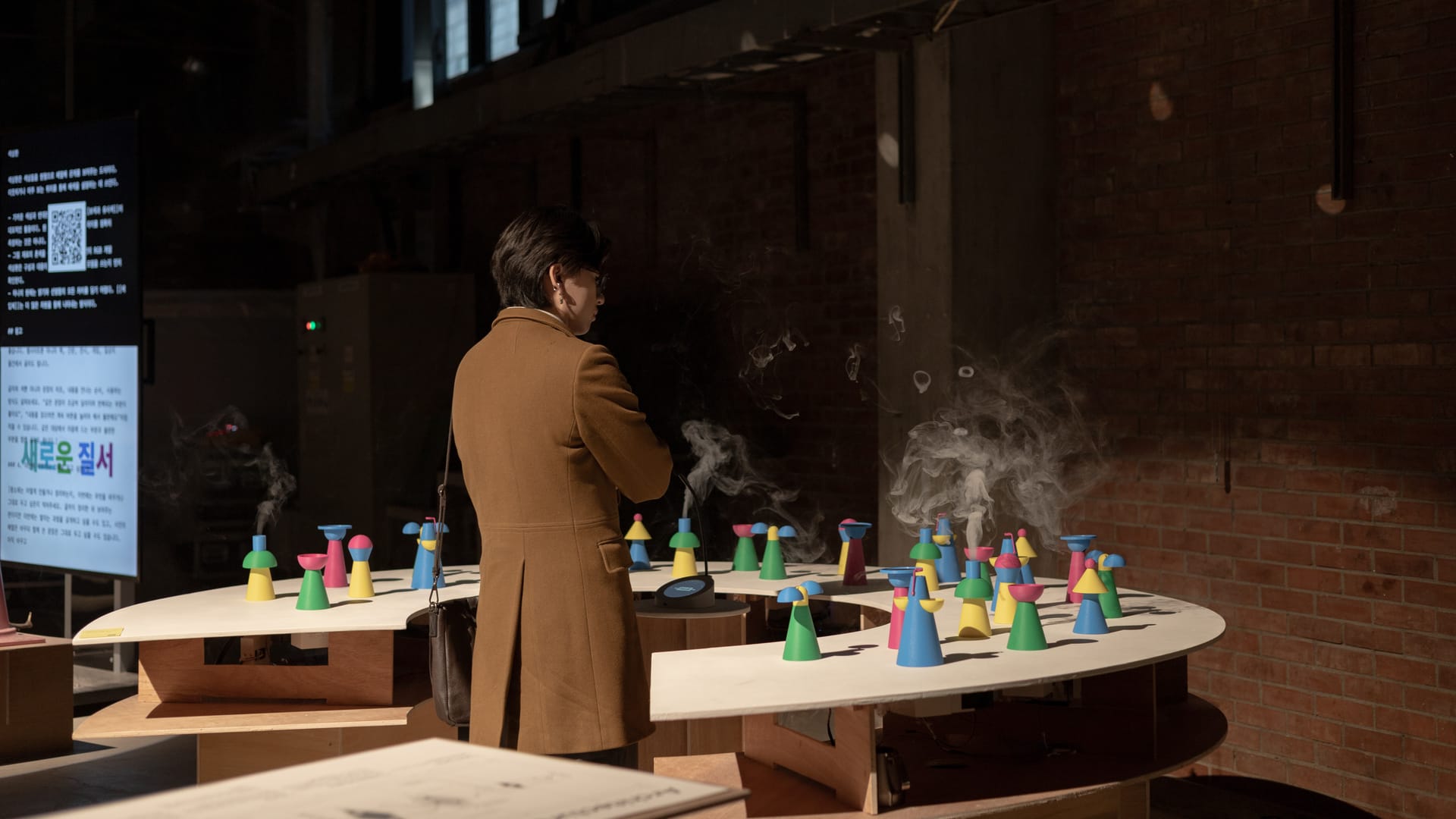
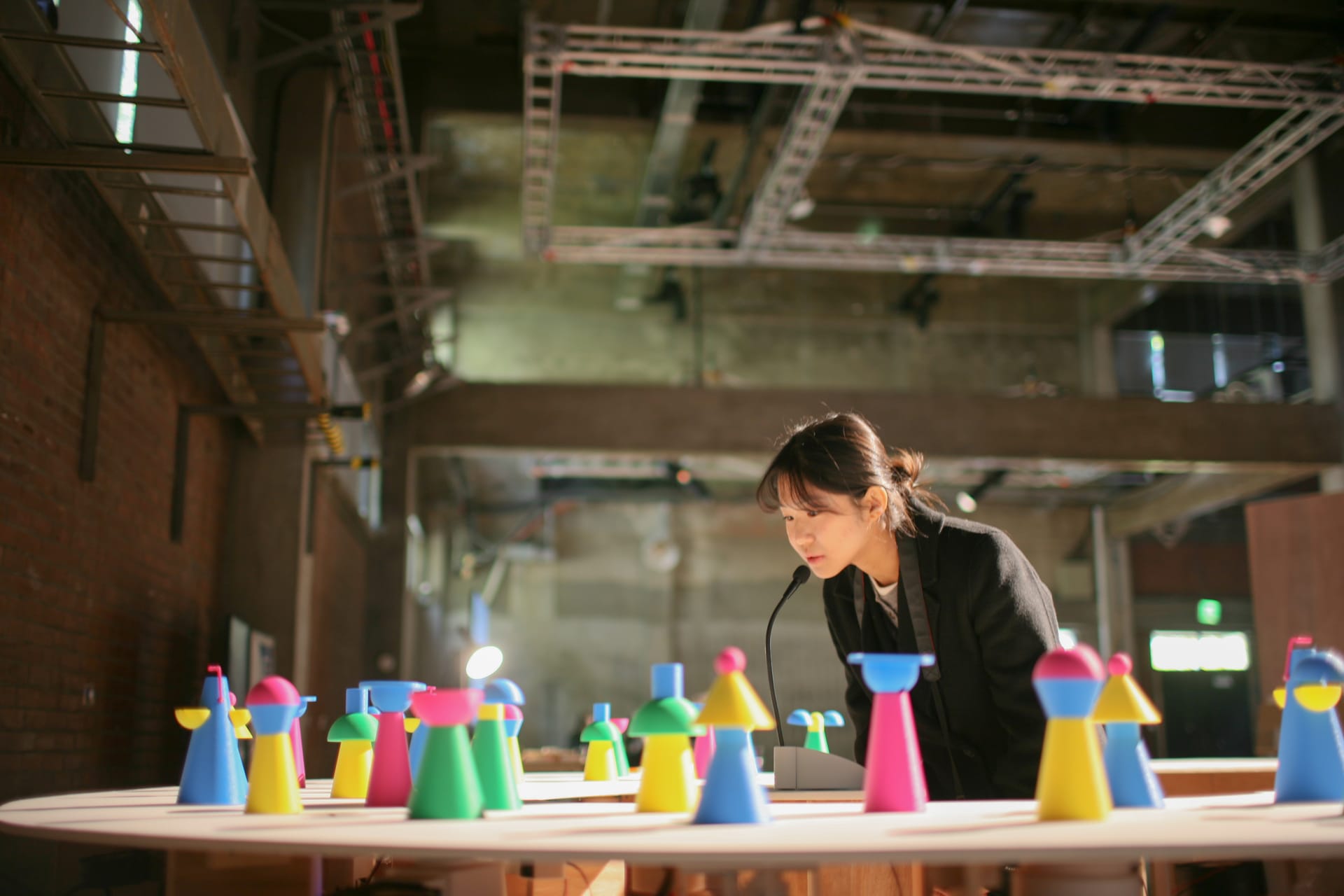
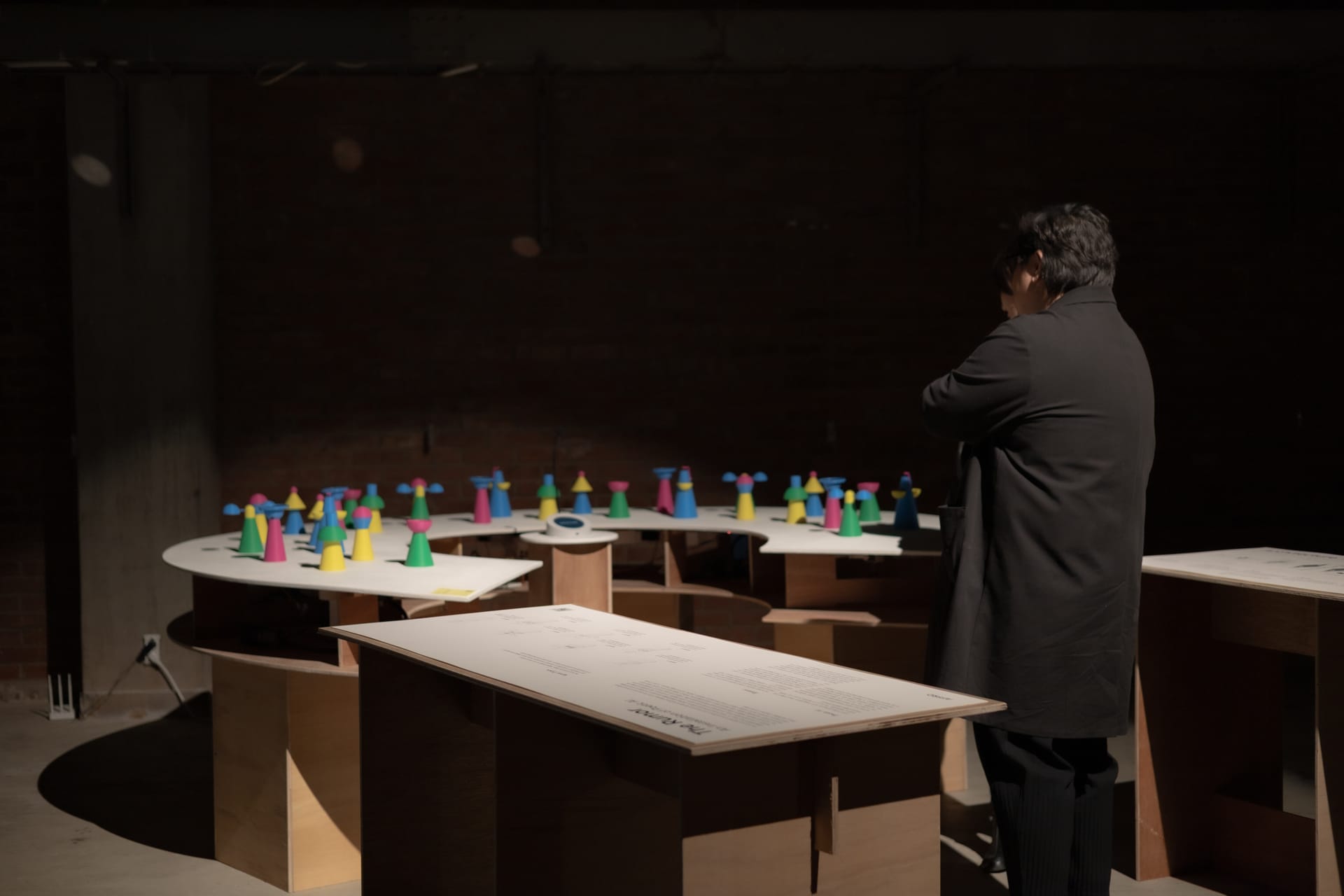
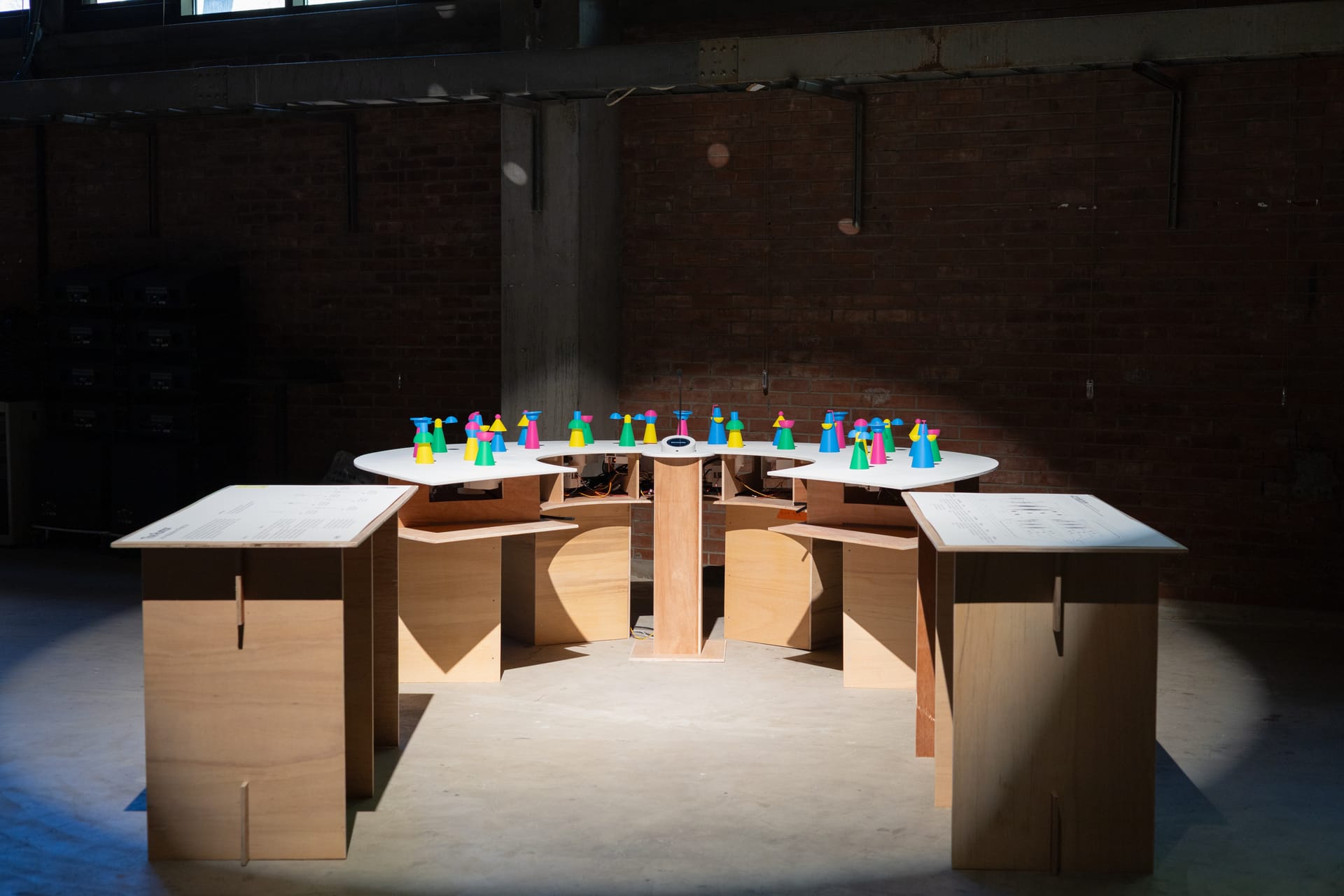
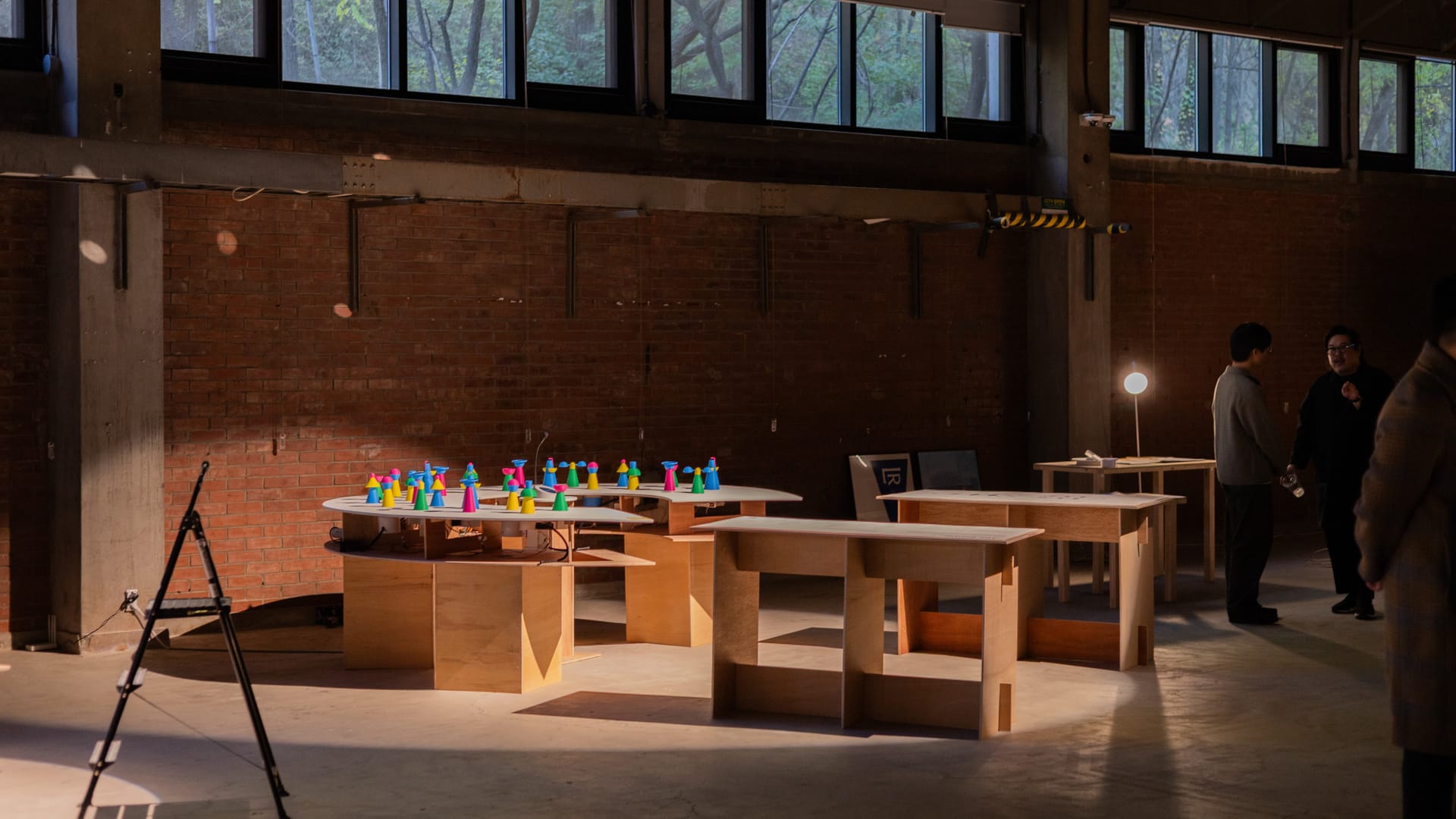
The Rumor는 관람객이 속삭인 한 문장이 LLM의 의미 분석과 여러 물리적 에이전트의 재해석을 거치며 서로 다른 의미와 감각으로 변형되는 과정을 경험하게 하는 Poetic AI 기반의 피지컬 인터랙션 설치 작품이다.
The Rumor is an interactive installation built on the idea of Poetic AI. It begins with a visitor’s whispered sentence. A large language model (LLM) first analyses what has been said; a network of physical agents then takes that interpretation in different directions, giving it new meanings and sensory forms.
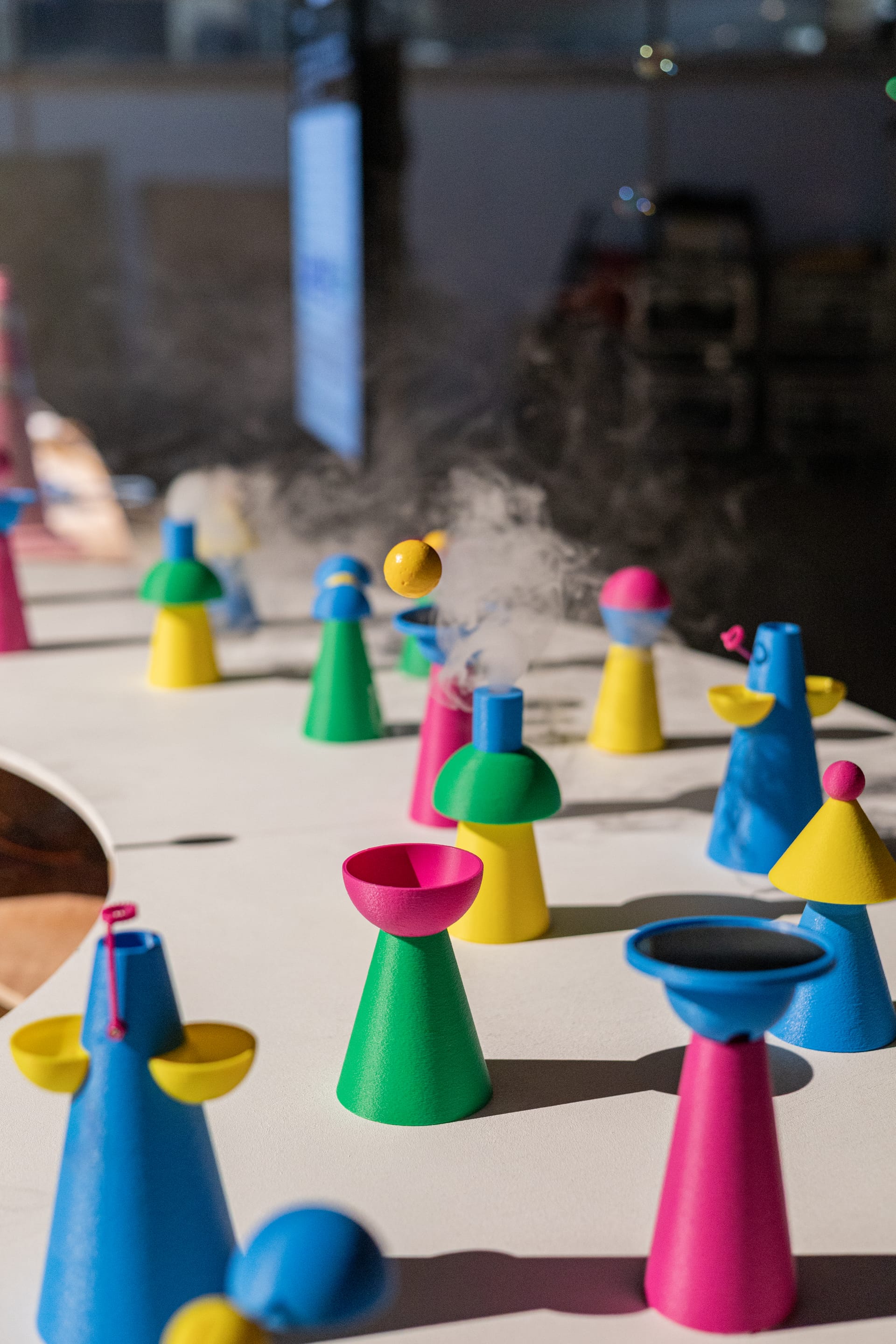
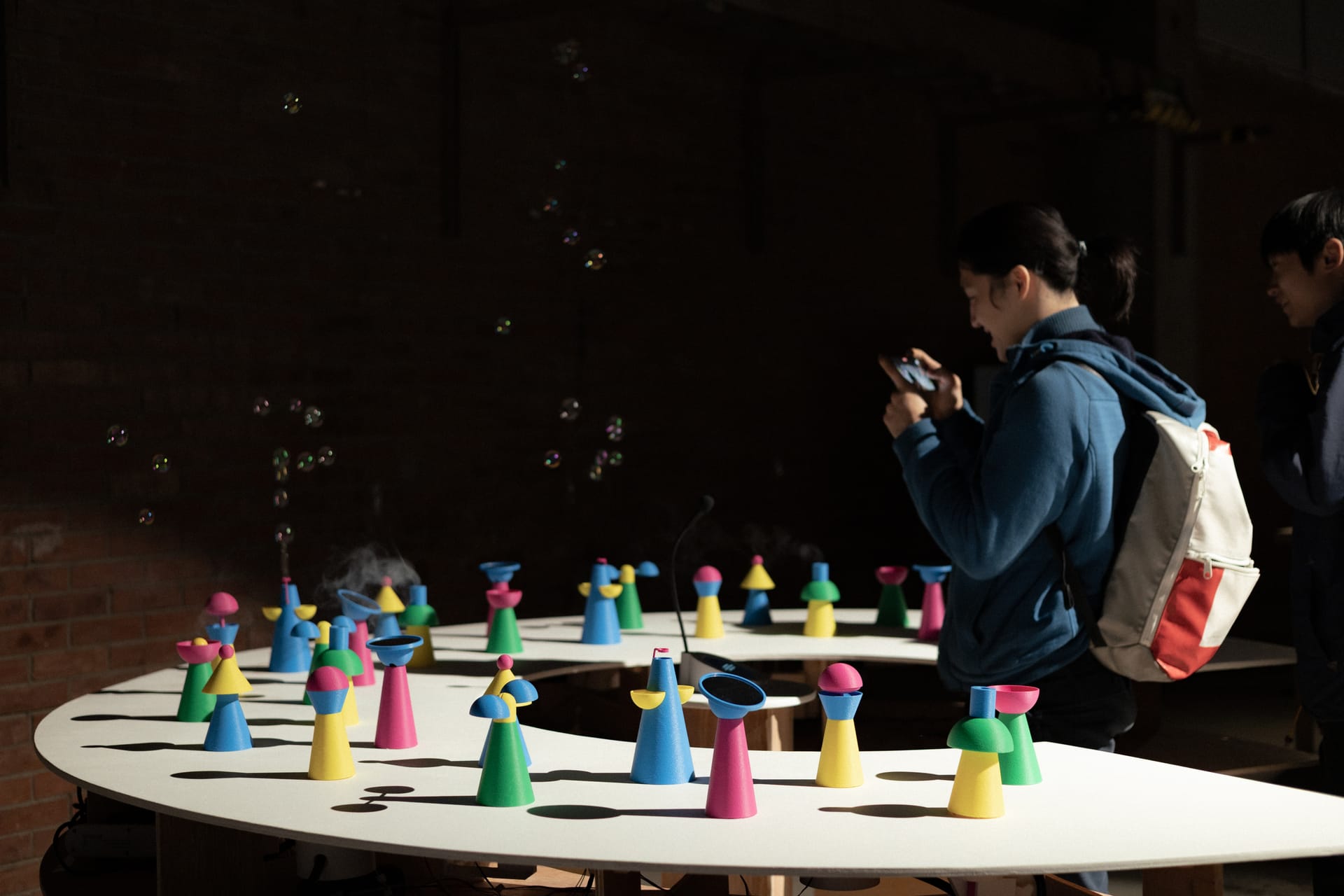
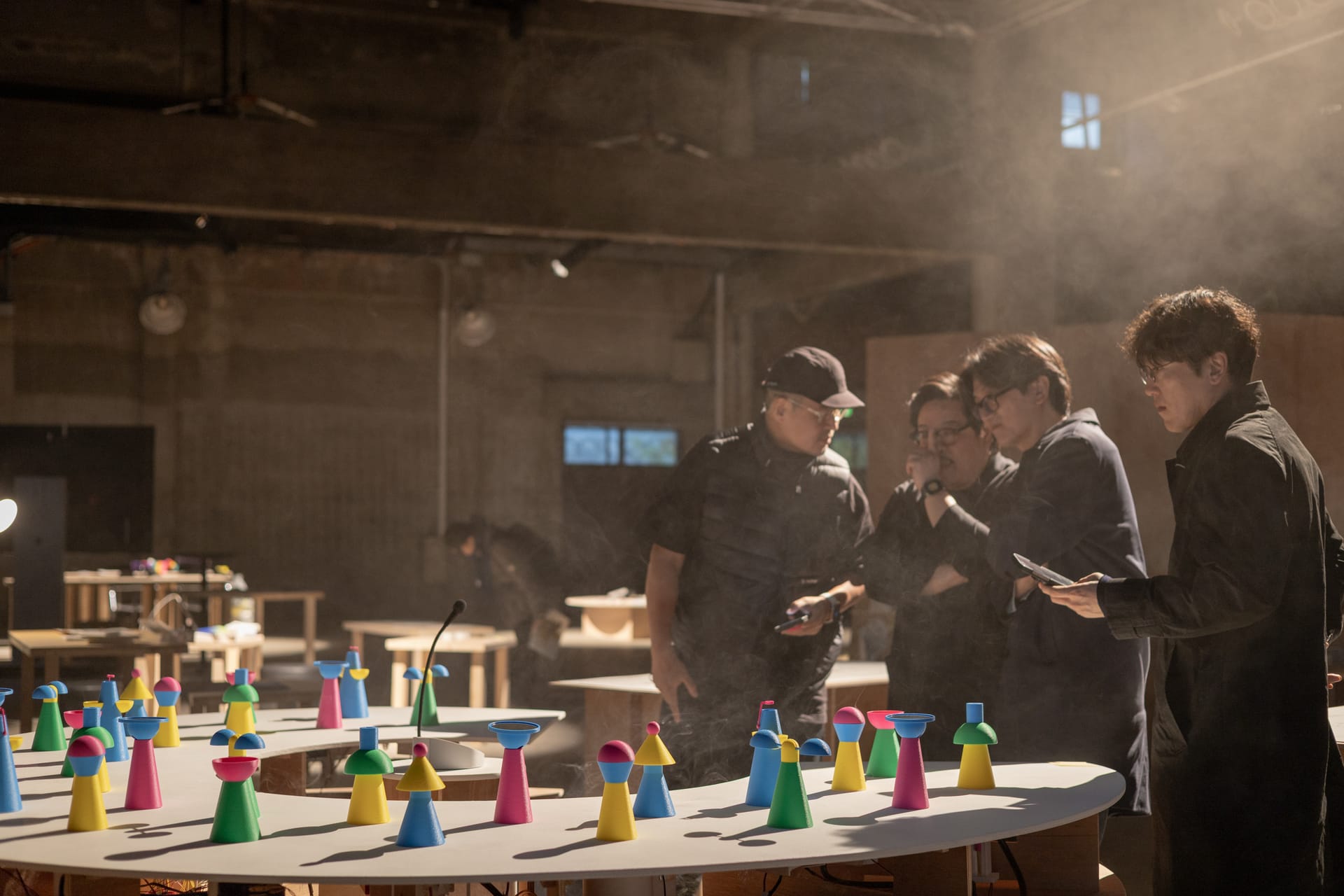
관람객은 작품에 명령을 내리지 않는다. 한 문장을 속삭이며 첫 반응을 불러낸다. LLM이 분석한 문장의 의미는 전시장에 놓인 28개의 소형 디바이스 사이로 전달된다. 각 디바이스는 서로 다른 물리적 언어를 사용하는 에이전트로 작동하며, 전달받은 신호를 각자의 방식으로 재해석해 움직임과 진동, 기계적 소리와 공명, 빛과 연기, 비눗방울 등의 감각적 현상으로 번역한다.
A whisper is an invitation to respond, rather than an instruction to follow. The LLM’s reading of the sentence is passed between 28 small devices arranged in the exhibition space. Each acts as an agent with a physical language of its own, responding through movement and vibration, mechanical sound and resonance, light and smoke, or soap bubbles.
에이전트들은 정보를 그대로 전달하지 않는다. 신호의 일부를 잊거나 과장하고, 전달을 지연시키거나 이전의 기억과 섞는다. 이러한 재해석이 이어지면서 하나의 속삭임은 예측하기 어려운 연쇄 반응으로 확장된다. 관람객은 최초의 신호를 건네지만, 그 신호가 어디로 향하고 어떤 형태로 나타날지는 미리 알 수 없다.
The agents do more than relay what they receive. They forget parts of a signal, exaggerate others, delay its transmission or mix it with their own memories. These reinterpretations turn a single whisper into an unpredictable chain of responses. Visitors provide the first signal, but cannot foresee where their words will travel or what they will become.
기존의 피지컬 AI(Physical AI)가 지능을 물리적 기능과 정확한 수행 능력으로 확장한다면, The Rumor가 제안하는 Poetic AI는 지능을 재해석과 변형의 과정으로 바라본다.
Where Physical AI extends intelligence into physical function and precise performance, the Poetic AI that The Rumor proposes sees intelligence as a process of reinterpretation and transformation.
여기에서 AI는 인간의 의도를 정확하게 파악하고 동일한 의미를 전달하는 시스템이 아니라, 해석과 변형을 통해 새로운 상황이 발생하도록 하는 매개체다. The Rumor는 AI의 할루시네이션에서 드러나는 의미의 어긋남에 주목하며, 오류와 왜곡, 망각과 불확실성을 창조적 가능성으로 받아들인다. 이 작품에서 지능은 정답을 전달하는 능력이 아니라, 예상하지 못한 의미와 감각을 만들어내는 능력으로 경험된다.
Here, AI is not a system that grasps human intent precisely and delivers the same meaning, but a medium through which interpretation and transformation give rise to new situations. The Rumor looks closely at the slippage of meaning revealed in AI hallucination, and embraces error and distortion, forgetting and uncertainty as creative possibilities. In this work, intelligence is experienced not as the ability to deliver the right answer, but as the ability to bring about meanings and sensations no one expected.
하나의 말은 에이전트 사이를 이동하며 소문이 된다. 한 에이전트가 만들어낸 반응은 다음 에이전트가 해석할 새로운 신호가 되고, 그 해석은 다시 다른 반응으로 이어진다. 이 과정에서 전달되는 것은 처음의 문장만이 아니라, 그 문장을 받아들인 여러 존재의 해석과 기억이 겹쳐진 흔적이다.
A single utterance becomes a rumor as it moves between agents. The response one agent produces becomes a new signal for the next agent to interpret, and that interpretation leads to yet another response. What travels along the way is not only the original sentence, but the layered traces of interpretation and memory left by every being that took it in.
소문이 퍼질수록 처음의 의미는 점차 알아보기 어려워지지만, 그 말이 남긴 반응은 서로 겹치고 분화하며 더 복잡한 물리적 양상으로 나타난다. 무엇이 처음의 말에 담겨 있었고 무엇이 전달되는 동안 새로 생겨났는지, 그 경계도 흐려진다. 전달하는 행위 자체가 의미를 바꾸면서, 처음의 말과 공간에 나타나는 현상 사이의 연결은 점차 느슨해진다.
As the rumor spreads, its original meaning grows harder to recognize, yet the responses it leaves behind overlap and branch out, emerging as ever more complex physical patterns. The line between what was in the first words and what arose along the way begins to blur. Because the act of passing words on changes their meaning, the link between the first words and what appears in the space gradually loosens.
관람객은 자신이 속삭인 말을 알고 있지만, 눈앞의 움직임과 소리에 자신의 의도가 얼마나 남아 있는지는 확신할 수 없다. 그 풍경은 여러 에이전트가 함께 만들어냈지만, 어느 한 주체의 뜻만으로 설명되지는 않는다. 공간의 반응이 서서히 잦아들 때까지, 소문은 처음의 의미에서 멀어지며 다른 해석과 감각으로 이어진다. 말은 한 사람에게서 시작되지만, 그 의미는 여러 존재 사이에서 다시 만들어진다.
Visitors know what they whispered, but they cannot be sure how much of their intent remains in the movement and sound before them. The scene is made by many agents together, yet no single one of them can account for it. Until the space slowly falls quiet, the rumor drifts away from its first meaning and carries on into other interpretations and sensations. Words begin with one person, but their meaning is remade among many beings.
소리를 들으려면 페이지 아무 곳이나 한 번 눌러 주세요.Click or tap anywhere on the page once to turn the sound on.
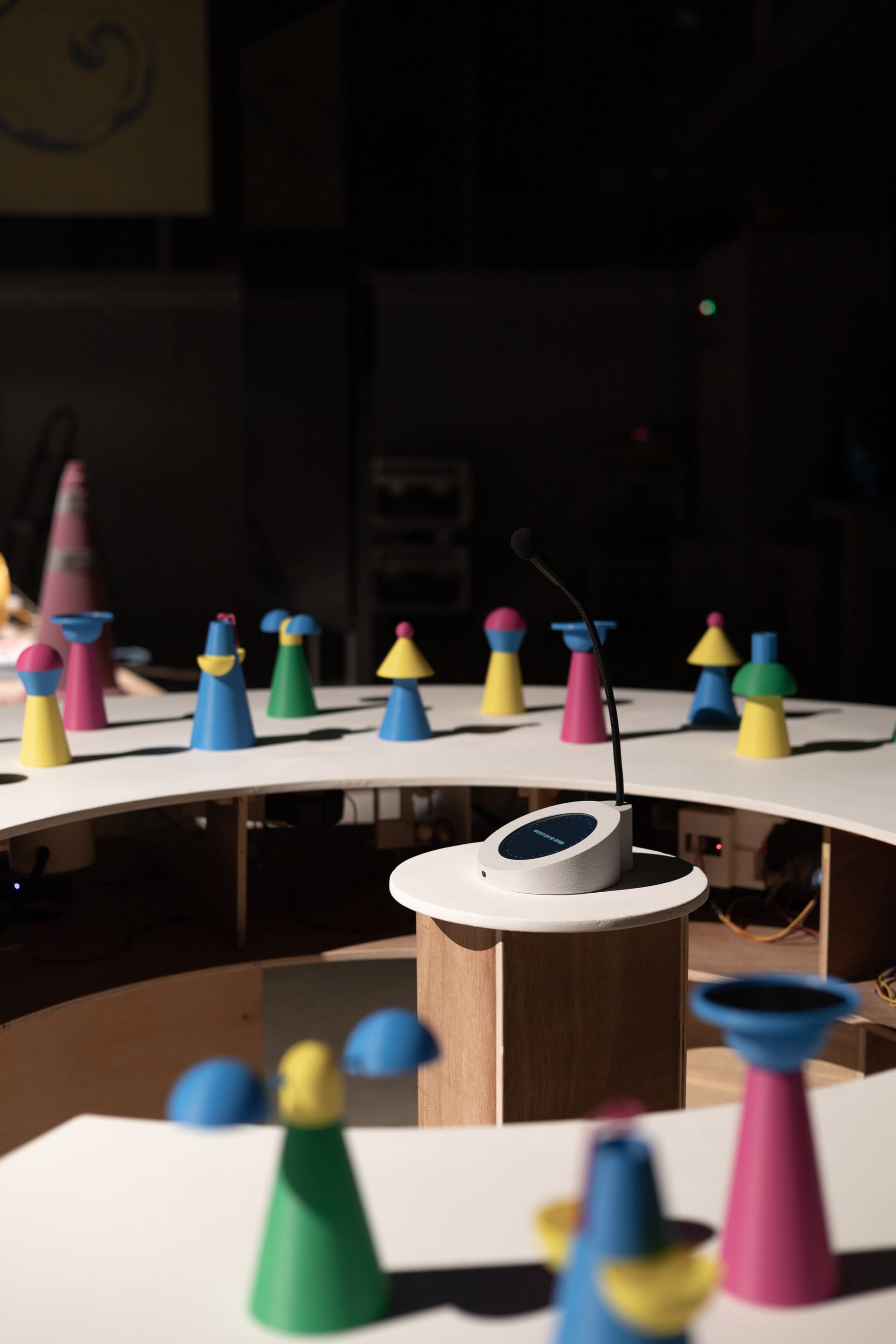
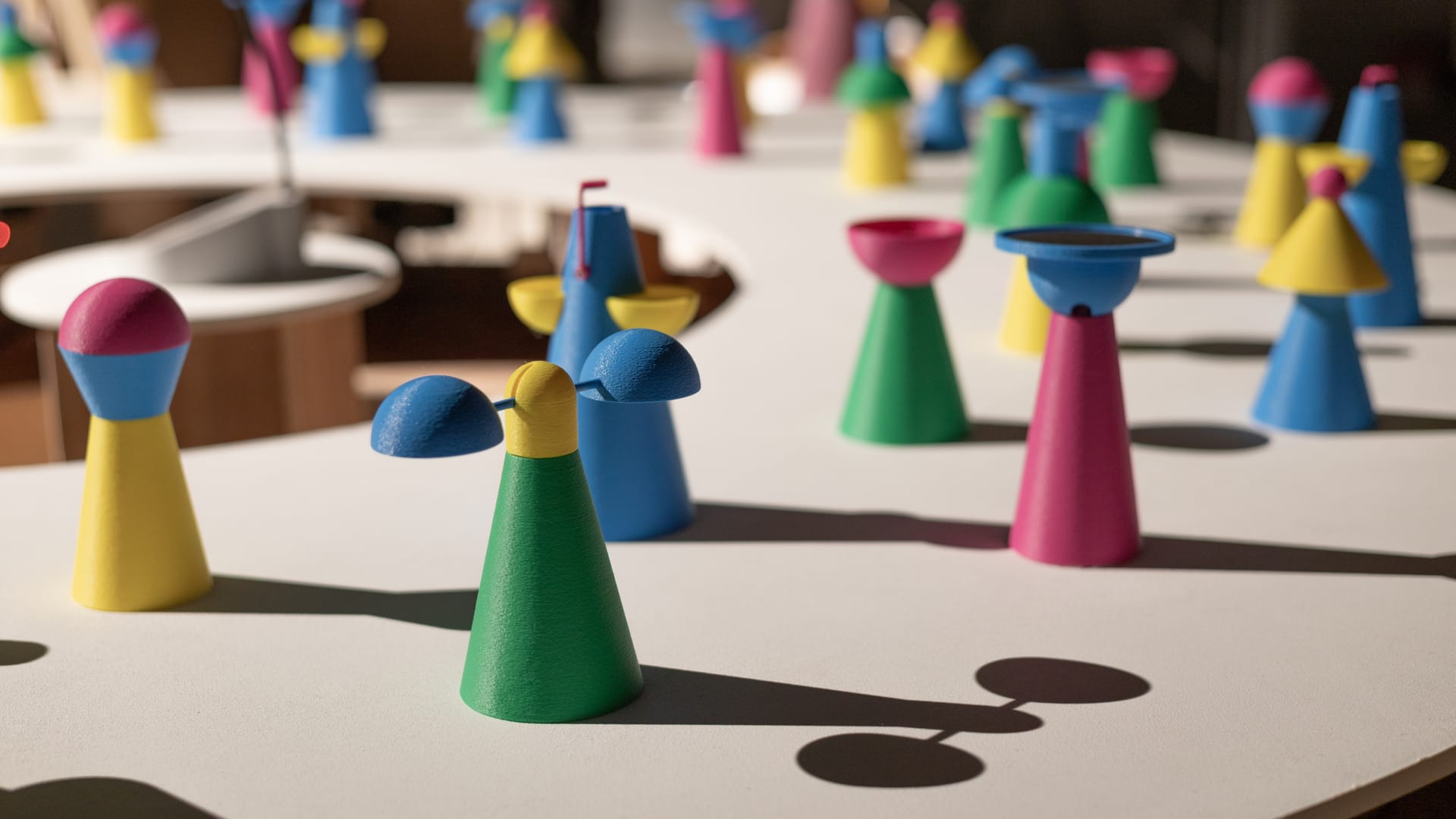
The Rumor의 에이전트 7종류는 전달받은 문장을 각자 다른 기준으로 해석한다. 말이 자기를 향하는지 타인을 향하는지, 긍정의 말인지 부정의 말인지, 확신에 찬 말인지 불확실한 말인지를 읽는다. 각자의 해석은 물리적 언어로 옮겨지며 다시 재해석되고, 처음의 문장과 다른 새로운 풍경을 조성한다.
The seven types of agents in The Rumor each interpret the sentence they receive by a different measure. They read whether the words are about the self or about others, whether they are positive or negative, and whether they are certain or uncertain. Each interpretation is carried into a physical language and reinterpreted in turn, shaping a new landscape that departs from the original sentence.
자신에 대한 긍정적인 이야기를 판단하여
해당된 값에 따라 상하로 움직이며 리듬감 있는 소리를 만들어낸다.
Responds to positive statements about the self,
moving up and down according to the value to make a rhythmic sound.

자신에 대한 부정적인 이야기를 판단하여
해당된 값에 따라 상하로 리듬감 있게 움직이며 연기를 흘려보낸다.
Responds to negative statements about the self,
moving up and down in rhythm according to the value as it lets smoke flow out.

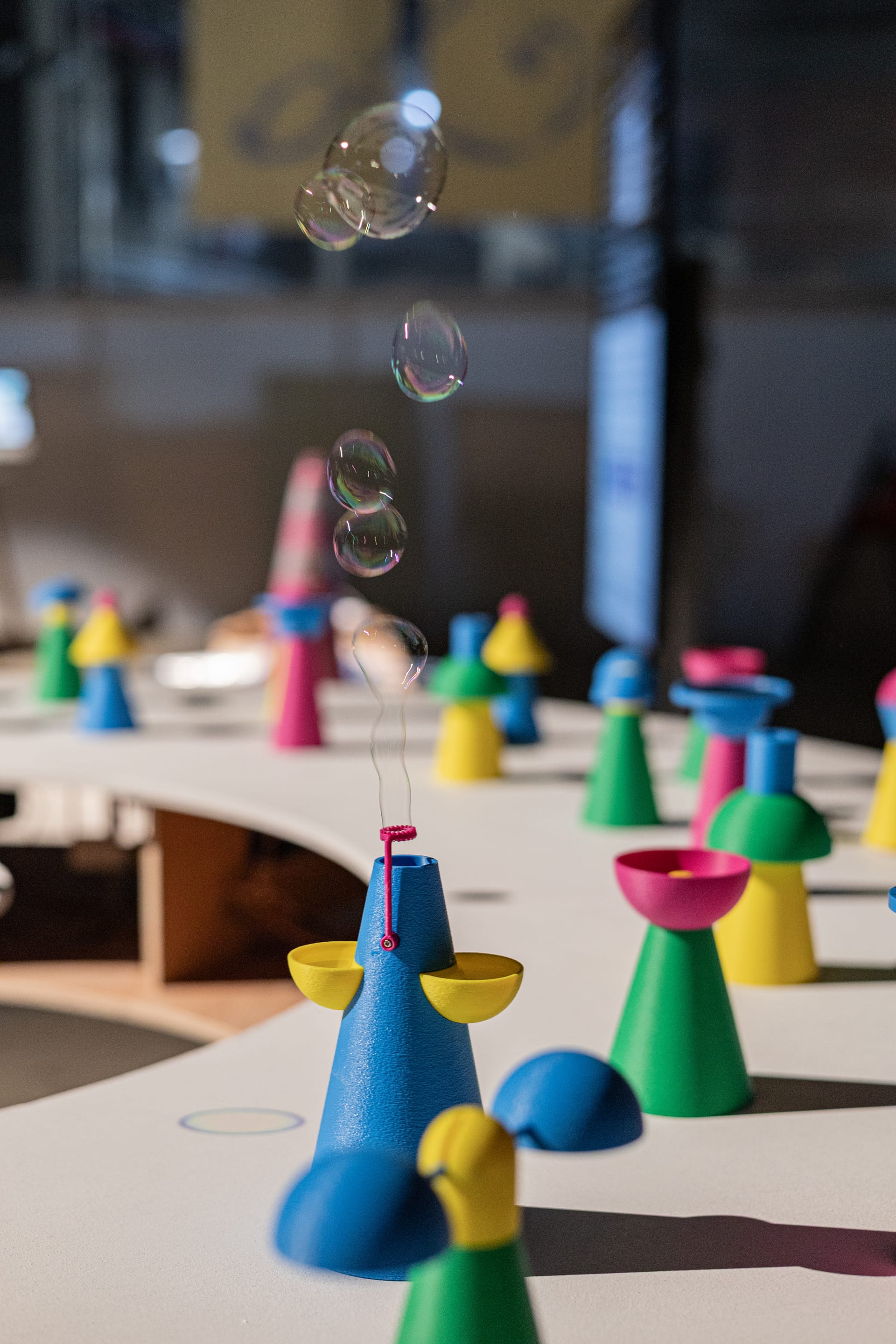
자신에 대한 확실한 이야기를 판단하여
해당된 값에 따라 막대가 좌우로 회전하며 비눗방울을 띄운다.
Responds to certain statements about the self,
rotating a bar left and right according to the value to release soap bubbles.

자신에 대한 불확실한 이야기를 판단하여
해당된 값에 따라 원형 연기를 연속적으로 쏘아 올린다.
Responds to uncertain statements about the self,
shooting rings of smoke upward one after another according to the value.

타인에 대한 긍정적인 이야기를 판단하여
해당된 값에 따라 바람의 세기를 조절해 공의 높이를 바꾼다.
Responds to positive statements about others,
adjusting the strength of the wind according to the value to change the height of a ball.

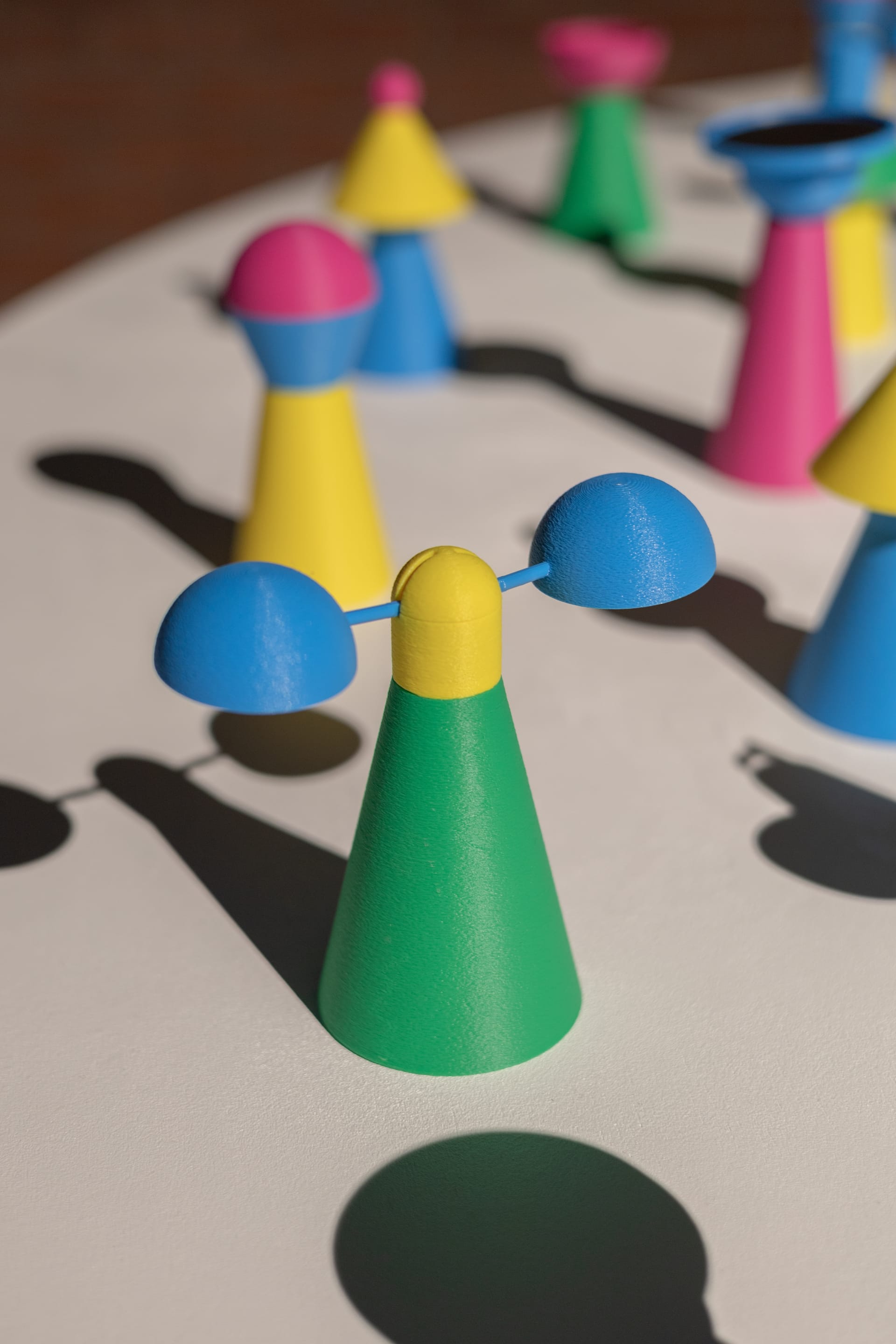
타인에 대한 부정적인 이야기를 판단하여
해당된 값에 따라 양쪽 반구가 부딪히며 리듬을 만들어낸다.
Responds to negative statements about others,
striking its two hemispheres together according to the value to make a rhythm.

타인에 대한 확실한 이야기를 판단하여
해당된 값에 따라 반사면의 각도를 조절해 빛을 반사한다.
Responds to certain statements about others,
adjusting the angle of a mirror according to the value to reflect light.
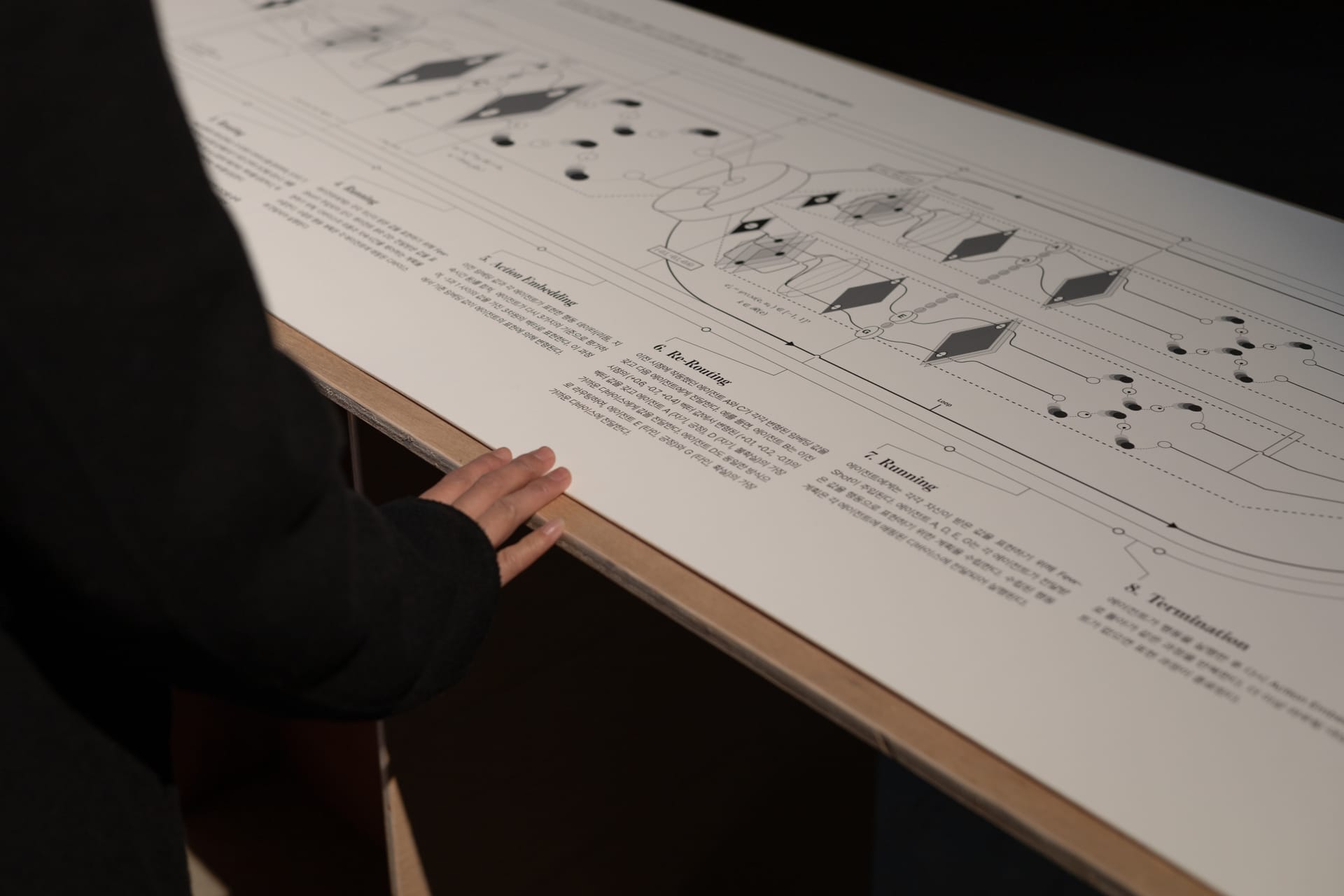
The Rumor는 의미가 행동을 만들고, 그 행동이 다시 의미를 바꾸는 순환 구조로 작동한다. 아래 다이어그램과 단계별 설명은 하나의 말이 여러 에이전트의 해석과 행동을 거쳐 움직임과 소리로 공간에 퍼져나가는 전체 흐름을 보여준다.
The Rumor runs as a loop in which meaning creates action, and that action changes meaning in turn. The diagram and step-by-step descriptions below show the whole flow: a single utterance passes through the interpretations and actions of many agents and spreads through the space as movement and sound.
마이크를 통해 짧은 한 문장의 인풋을 넣는다. Gemma 4가 들어온 인풋의 의미를 분석한다.
A visitor speaks one short sentence into the microphone. Gemma 4 analyzes the meaning of the input.
분석된 의미를 바탕으로 자기/타인, 긍정/부정, 확실/불확실 총 3가지의 기준으로 평가하여, -1과 1 사이의 값을 가진 3차원의 벡터로 표현한다. 예를 들어, “나는 스칼렛을 좋아하는 것 같아” 라는 말은 나에 대한 긍정적인 불확실한 이야기로 판단되어 (+0.6, -0.7, +0.4)로 임베딩 된다.
Based on the analyzed meaning, the sentence is scored on three criteria (self/other, positive/negative, certain/uncertain) and expressed as a three-dimensional vector with values between -1 and 1. For example, “I think I like Scarlett” is judged to be a positive, uncertain statement about the self and is embedded as (+0.6, -0.7, +0.4).
일곱 종류의 에이전트는 각 4개의 디바이스를 공유하며, 3가지 기준 중 자신이 처리할 입력을 받기 위한 2개의 조건을 갖는다. 예를 들어 에이전트 A는 자기 & 긍정에 해당하는 벡터를 담당하고, 에이전트 B는 자기 & 부정에 해당하는 벡터를 담당한다.
Each of the seven agent types runs four devices and has two conditions, drawn from the three criteria, that decide which inputs it takes on. For example, Agent A handles vectors that are self & positive, and Agent B handles vectors that are self & negative.
만약 임베딩 결과가 (+0.6, -0.7, +0.4) 이라면 부여된 조건을 충족하는 에이전트 A (자기, 긍정), 에이전트 C (자기, 확실)가 작동하여, 각 에이전트의 디바이스 중 작동 횟수가 가장 적은 디바이스에게 전달한다.
If the embedding is (+0.6, -0.7, +0.4), the agents whose conditions it meets, Agent A (self, positive) and Agent C (self, certain), are activated, and each passes the value to whichever of its devices has run the fewest times.
에이전트에게는 각각 자신이 받은 값을 표현하기 위해 Few-Shot이 주입되어 있다. 에이전트 B와 D는 각각 전달받은 값을 표현하기 위해, 디바이스의 리듬과 지속시간을 제어하는 계획을 수립한다. 수립된 행동 계획은 각 에이전트에 매핑된 디바이스에 전달되어 실행된다.
Each agent is primed with Few-Shot examples for expressing the values it receives. Agents B and D each plan how to control the rhythm and duration of their devices to express the values they received. The resulting action plans are sent to the devices mapped to each agent and carried out.
이전 임베딩 값과 각 에이전트가 표현한 행동 데이터(리듬, 지속시간 등)를 합쳐, 에이전트가 다시 3가지의 기준으로 평가하여, -1과 1 사이의 값을 가진 3차원의 벡터로 표현한다. 이 과정에서 기존 임베딩 값이 에이전트의 표현에 의해 변형된다.
The previous embedding is combined with the action data each agent expressed (rhythm, duration and so on), and the agent scores it again on the three criteria, expressing it as a three-dimensional vector with values between -1 and 1. In this step, the original embedding is transformed by the agents’ expression.
이전 시점에 작동했던 에이전트 A와 C가 각각 변형된 임베딩 값을 갖고 다음 에이전트에게 전달한다. 예를 들면, 에이전트 B는 이전 시점의 (+0.6, -0.7, +0.4) 벡터 값에서 변형된 (+0.1, +0.2, -0.1)의 벡터 값을 갖고 에이전트 A (자기, 긍정), D (자기, 불확실)의 가장 가까운 디바이스에게 값을 전달한다. 에이전트 D도 동일한 방식으로 라우팅하여, 에이전트 E (타인, 긍정)와 G (타인, 확실)의 가장 가까운 디바이스에 전달한다.
Agents A and C, which acted in the previous round, each pass their transformed embedding on to the next agents. For example, Agent B carries the vector (+0.1, +0.2, -0.1), transformed from the earlier (+0.6, -0.7, +0.4), and passes it to the nearest devices of Agent A (self, positive) and Agent D (self, uncertain). Agent D routes the same way, passing its value to the nearest devices of Agent E (other, positive) and Agent G (other, certain).
에이전트에게는 각각 자신이 받은 값을 표현하기 위해 Few-Shot이 주입된다. 에이전트 A, D, E, G는 각 에이전트가 전달받은 값을 행동으로 표현하기 위한 계획을 수립한다. 수립된 행동 계획은 각 에이전트에 매핑된 디바이스에 전달되어 실행된다.
Each agent is primed with Few-Shot examples for expressing the values it receives. Agents A, D, E and G each plan how to turn the values they received into action. The resulting action plans are sent to the devices mapped to each agent and carried out.
에이전트가 행동을 실행한 후 다시 Action Embedding 단계로 돌아가 같은 과정을 반복한다. 더 이상 라우팅 대상, 에이전트가 없으면 표현 과정이 종료된다.
Once the agents have carried out their actions, the process returns to the Action Embedding step and repeats. When there are no more agents to route to, the expression process ends.
김재엽은 홍익대학교 산업디자인과 교수이자 네이버 검색 디자인 총괄로, AI 기반의 검색 경험과 넥스트 인터페이스를 설계해 왔다. 그가 만든 연구·창작 그룹 AFFRD는 산업계의 실무 경험과 학계의 연구를 연결하며, 물리적 현실과 디지털 세계의 경계에서 새로운 경험을 탐색한다. AFFRD는 인공지능 인터페이스, 피지컬 AI, 공간컴퓨팅을 매개로 새로운 기술이 인간의 일상과 관계를 어떻게 바꾸는지 질문한다. 팀은 이러한 질문을 실제 서비스와 프로덕트, 실험적 작업으로 구체화하며 기술이 지닌 사회적·문화적·윤리적 의미를 탐구한다.
Jaeyeop Kim is a professor of Industrial Design at Hongik University and head of search design at NAVER, where he has shaped AI-driven search experiences and next-generation interfaces. AFFRD, the research and creative group he founded, connects hands-on industry experience with academic research to explore new experiences at the boundary between physical reality and the digital world. Through AI interfaces, Physical AI and spatial computing, AFFRD asks how new technologies change people’s everyday lives and relationships. The team gives shape to these questions in real services, products and experimental work, examining the social, cultural and ethical meaning of technology.